I am the 99%, and so are you. My parents have a college degree and can't seem to find a stable job in this economy. A movement is taking place all round the world. This movement is known as "occupy". I live in hayward and the nearest one is in Oakland, Ca at the moment. People are protesting for a better economy, and more jobs. Most have financial problems. Americans are trying to get out of debt, and cant even find a job to make ends meat. Most americans rely on un employment funds known as EDD. EDD doesn't see the necessity of money flow in our economy for non-employed Americans. There a big increase in college applications to state colleges being more affordable. The movement was caused to by the government, and the americans took action to make their economy better, and growing in participants.
Friday, December 9, 2011

Thursday, December 1, 2011
Assignment #12-Outline
Introduction
A. We are the 99% and so are you!
B. I am the 99%, I have a college degree and cant find a stable job in this economy.
C. We need to make a movement to change our economy, put pressure on the government for support.
D. Financial transparency, Financial problems, Governments involvement,
Body
A. Financial Transparency
1. Americans are trying to get out of debt, and cant even find a job to make ends meat.
2. EDD doesn't see the necessity of money flow in our economy for non-employed Americans.
B. Financial Problems
1. Current colleges are being occupied and classes being missed due to not being able to afford current tuition's.
2. College graduates jobless still after 6 months of graduating, some even more than 12 months.
C. Governments Involvement
1. The government is not currently involved with the protesters occupying city's.
2. The government is trying to approve more financial aid for people who have filed for unemployment.
3.Government is being forced to make this economy better and accelerate with cash flow.
Conclusion
A. We will make change and proceed with improving our economy.
B. The 99% is joined together and strong and looking overall main problems, such as government involvement, financial problems, and financial transparency.
C. The 99% will take over the 1% and be 100% successful.
A. We are the 99% and so are you!
B. I am the 99%, I have a college degree and cant find a stable job in this economy.
C. We need to make a movement to change our economy, put pressure on the government for support.
D. Financial transparency, Financial problems, Governments involvement,
Body
A. Financial Transparency
1. Americans are trying to get out of debt, and cant even find a job to make ends meat.
2. EDD doesn't see the necessity of money flow in our economy for non-employed Americans.
B. Financial Problems
1. Current colleges are being occupied and classes being missed due to not being able to afford current tuition's.
2. College graduates jobless still after 6 months of graduating, some even more than 12 months.
C. Governments Involvement
1. The government is not currently involved with the protesters occupying city's.
2. The government is trying to approve more financial aid for people who have filed for unemployment.
3.Government is being forced to make this economy better and accelerate with cash flow.
Conclusion
A. We will make change and proceed with improving our economy.
B. The 99% is joined together and strong and looking overall main problems, such as government involvement, financial problems, and financial transparency.
C. The 99% will take over the 1% and be 100% successful.
assignment #11
Directions:Flaherty filmed a number of heavily staged romantic films during this time period. Often showing how his subjects would have lived 100 years earlier and not how they lived right then. For example the films will tell you how a gun was made and how to shoot it from back in the day
The newsreel tradition is important in documentary film. Newsreels were also sometimes staged but were usually re-enactments of events that had already happened, not attempts to steer events as they were in the process of happening.They much of the battle footage from the early 20th century was staged. The cameramen would usually arrive on site after a major battle and re-enact scenes to film them.The propagandist tradition consists of films made with the explicit purpose of persuading an audience of a point. One of the most notorious propaganda films is Leni Riefenstahl's film, which chronicled the 1934 Nazi Party Congress and was commissioned by Hitler.This was dependent on some technical advances in order to exist: light, quiet and reliable cameras, and portable sync sound. Shooting on location, with smaller crews. The filmmakers taking advantage of advances in technology allowing smaller, handheld cameras and synchronized sound to film events on location as they unfolded.In the 1960s and 1970s, documentary film was often conceived as a political weapon. Among the many political documentaries early 1970s; "Chile: A Special Report," a public television's first in depth expository look of the September 1973 overthrow of the legitimate Salvador Allende, Chilean government by the Pinochet armed forces, who ruled by terror.
1) Go to the following website and read about the History of Documentary Filmshttp://en.wikipedia.org/wiki/Documentary_film
2) Take notes for each of the following topics. A minimum of 3 sentences per topic, IN YOUR OWN WORDS.
Documentary Film Note Outline:
I . History of Documentary Film
A. Pre-1900-The early documentary was a simple one shot captured in film. They will be simple things like workers leaving the factory, a boat leaving and a train leaving the station. Theses kind of films are called "actuality" films.
B. 1900–1920- Travelogue films were very popular in the early 20th century.They had early color movies. It was important for early films to move beyond the concept of scenic.
C. 1920s
1) Romanticism-
2)The city symphony- These kind of of documentaries showed the human ways. They show how humans live and how they react. They also had videos shown a man made way of life.
3) Kino-Pravda- Kino-pravda means "cinematic truth". These had varied lenses, shot-counter shot editing, time lapse,ability to slow motion, stop motion and fast-motion. This can render reality more accurately than the human eye.
4) Newsreel tradition-
D. 1920s–1940s-
E. 1950s–1970s
1) Cinéma-vérité-
2) Political weapons-
3) Modern documentaries-
Dramatic narrative films, documentaries typically have far lower budgets which makes them attractive to film companies because even a limited theatrical release can be highly profitable.The nature of documentary films has expanded in the past 20 years from the cinema verité style introduced in the 1960s in which the use of portable camera and sound equipment allowed an intimate relationship between filmmaker and subject
Films in the documentary form without words have been made. They have been very useful.
4) Documentaries without words-
Friday, November 18, 2011
Assignment #11- Documentry Film
I . History of Documentary Film
A. Pre-1900-Early film was dominated by the novelty of showing an event. They were single-shot moments captured on film: a train entering a station, a boat docking, or factory workers leaving work. These short films were called "actuality" films; the term "documentary" was not refered until 1926.
B. 1900–1920-Travelogue film were very popular in the early part of the 20th century. They were often referred to by distributors as "scenics." Scenics were among the most popular sort of films at the time.
C. 1920s-Different time period of change of documentries.
1) Romanticism-Flaherty filmed a number of heavily staged romantic films during this time period. Often showing how his subjects would have lived 100 years earlier and not how they lived right then.
2)The city symphony-The continental, or realist, tradition focused on humans within human-made environments. And included the so-called "city symphony". Such as Walters Ruttman's Berlin.
3) Kino-Pravda-Vertov believed the camera — with its varied lenses. Shot-counter shot editing. Ability to slow motion.
4) Newsreel tradition- The newsreel is a tradition. Newsreels were also sometimes staged but were usually re-enactments of events that had already happened. Not attempts to steer events as they were in the process of happening.
D. 1920s–1940s-The propagandist tradition consists of films made with the explicit purpose of persuading an audience of a point. One of the biggest film was leni Riefensthal's.
E. 1950s–1970s- Change of Documentaries again.
1) Cinéma-vérité- In other words it was also called Direct Media. Was dependent on some technical advances in order to exist: light, quiet and reliable cameras, and portable sync sound.
2) Political weapons-In the 1960s and 1970s, documentary film was often conceived as a political weapon against capitalism. Among the many political documentaries early 1970s; "Chile: A Special Report".
3) Modern documentaries- Box office analysts have noted that this film genre has become increasingly successful in theatrical release with films like " Super Size me". Compared to dramatic narrative films, documentaries typically have far lower budgets.
4) Documentaries without words-Films in the documentary form without words have been made from 1982 untill now.
Thursday, October 27, 2011
Assignment #10-Political Poster Analysis
Image A: Don't Let USA Rule M' sia [Malaysia]: Stop the Free Trade Agreement
2006
2010.54.1043 | OMCA COLLECTIONS
Purpose
-The documents purpose is to show that don't let the government completely control you like a puppet.
-Bush's was still president during 2006, and Americans were disliking how he was running things.
-This poster uses images of a man with American color jacket using Americans as puppets.
-This document is for people who believe anything the government tell them.
-This document suggests that people are ignoring the real facts, and believing the governments word.
-I believe at the time this poster was created it was really accurate.
Document Author
-No author.
-The writers motives are to convince Americans that the government will control you as a puppet.
Evidence, Support, and Outcomes
-Not every president completes everything he promises, the affects are believable.
-It uses logic emotion, to persuade its reader and to make it feel that the government does not complete its promises.
-The moral value is that is not good to promise something and not keep it.
-If the audience accepts this message they will see the reality of the government.
-If everyone in the world saw this message people would analyze their government more.
Overall Impression and Conclusions
-The overall impression is that the government can control you if you are on their political side.
-I believe this poster is a persuasive poster because it wants Americans to show how the government controls Americans.
2006
2010.54.1043 | OMCA COLLECTIONS
Purpose
-The documents purpose is to show that don't let the government completely control you like a puppet.
-Bush's was still president during 2006, and Americans were disliking how he was running things.
-This poster uses images of a man with American color jacket using Americans as puppets.
-This document is for people who believe anything the government tell them.
-This document suggests that people are ignoring the real facts, and believing the governments word.
-I believe at the time this poster was created it was really accurate.
Document Author
-No author.
-The writers motives are to convince Americans that the government will control you as a puppet.
Evidence, Support, and Outcomes
-Not every president completes everything he promises, the affects are believable.
-It uses logic emotion, to persuade its reader and to make it feel that the government does not complete its promises.
-The moral value is that is not good to promise something and not keep it.
-If the audience accepts this message they will see the reality of the government.
-If everyone in the world saw this message people would analyze their government more.
Overall Impression and Conclusions
-The overall impression is that the government can control you if you are on their political side.
-I believe this poster is a persuasive poster because it wants Americans to show how the government controls Americans.
Image B: When I walk in the fields with my soul in the wind..., 10/27/11
2010.54.415 | OMCA COLLECTIONS
2010.54.415 | OMCA COLLECTIONS
Purpose
-The documents purpose is to get all the Latinos attention and get health care.
The message of this document is to promote health care for all Chicanos and Latinos.
-It is important for this message to be delivered because a lot of Latinos do not have health care so its saying we should protest to get health care.
-The document communicates because it shows the welga bird with two swords. It uses really nice red and yellow. -On the top it says in really big letters, "Raza Health Conference."
-The audience are Latinos and field workers as well.
-The message suggest that the farmers need health care because they work on the fields and they can get sick.
-The beliefs are really accurate because it is directed to all the Latinos and the farmers. Which a lot of Latinos don't have health care til this day. Either we don't qualify or you have to have papers.
Document Author
-Pablo Neruda wrote the message.
-The writers motives is to get all the attention from the Latinos and let them know we can make a change or difference. If we fight for it, all of the Latinos can get health care.
Evidence, Support, and Outcomes
-The details that the documents use are the welga bird. That is a big thing becaus that represents the Latinos.
-The emotions show a good and powerful feeling.
-The audience is likely to feel worried and willing to go fight for their rights.
-The ethical values are used to communicate to the message are Chicano and the picture.
-If the audience accept the message all the Chicanos will come together and make a difference.
-All the farmers and Chicanos will get health care.
Overall Impression and Conclusions
-The overall impression of the message is to tell the Latinos and farmers to get health care.
-I believe is an argument because its trying to fight for the farmers rights.
Thursday, October 13, 2011
Assignment #8 Cubism & Pablo Picasso
Analytical Cubism
Mandolin
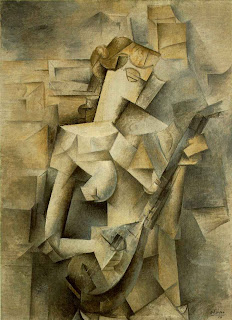 http://www.artchive.com/artchive/P/picasso/tellier.jpg.html
Braque Violin
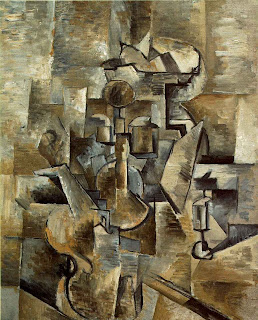 http://davidtmiller.wordpress.com/2008/11/12/information-distribution-systems-cubism-as-visual-language/
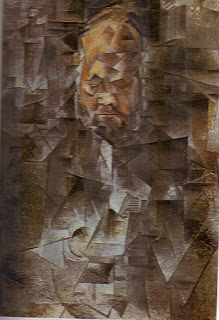 http://artedeximena.wordpress.com/arte-contemporaneo/i-las-vanguardias-historicas/cubismo-y-esc/cta-retrato-de-ambroise-vollard-1910-picasso/
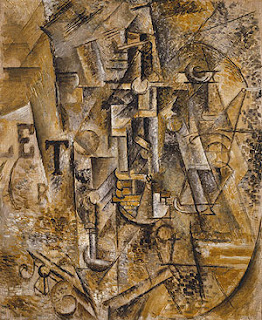 http://www.metmuseum.org/toah/works-of-art/1999.363.63
Mandolin
 http://www.artchive.com/artchive/P/picasso/tellier.jpg.html
The musical instrument captures my eye in this image, i like the shading. Dark colors are used specifically brown and green, and different shades of those colors. Line texture and shape are being used. Center of design is the principle of design used. This influences my painting by shadowing my body around the background of my Picasso self portrait.
Braque Violin
 http://davidtmiller.wordpress.com/2008/11/12/information-distribution-systems-cubism-as-visual-language/
The Violin captures my eye, i like the contrast of the picture. Different shades of colors are being used mainly brown and a mixture of black. Line texture and shape are being used. Balance is being used, everything is equally spread around. This painting influences me to use different shades of one color in my Picasso self portrait.
Ambrose Vollard http://artedeximena.wordpress.com/arte-contemporaneo/i-las-vanguardias-historicas/cubismo-y-esc/cta-retrato-de-ambroise-vollard-1910-picasso/
The mans face captures my eye, i like how his face is the lightest part in this dark piece. One main color being used which is black, the one light color to see the significance in the image. Line texture and shape are being used. Center of interest is being used to focus on the mans face. This painting influences me to make a significant color change in my self Picasso portrait.
Still life With a Bottle of Rum http://www.metmuseum.org/toah/works-of-art/1999.363.63
The letters capture my attention, i like how letters are used in his artwork. The colors, are gold, brown, Grey, and black showing a stable emotion. Line texture and shape are being used. Balance is the principle of design being used as you can see everything is spread out trough out the painting. This influences me to put letters or some type of letter shape in my Picasso self portrait.
Friday, October 7, 2011
Assignment #7 Principles of Design
• Balance - a feeling of equality of weight, attention, or attraction of the various elements within the composition as a means of accomplishing unity

http://www.nyu.edu/classes/keefer/body/sci.html
• Movement - the suggestion of action or direction, the path our eyes follow when we look at a work of art

http://www.nyu.edu/classes/keefer/body/sci.html
• Repetition and rhythm - the act of repeating an element either regularly or irregularly resulting in a rhythm of the repeating elements

http://hannakaye.wordpress.com/
• Emphasis - the stress placed on a single area of a work or unifying visual theme

http://www.vldb2005.org/tourism/main.php?day=20050830
• Simplicity (a.k.a. visual economy) - the elimination of all non-essential elements or details to reveal the essence of a form

http://www.elfwood.com/~hession/Contrast.2796374.html
• Contrast - the difference between elements or the opposition to various elements

http://www.elfwood.com/~hession/Contrast.2796374.html
• Proportion - the relation of two things in size, number, amount, or degree

http://lynbrown.com/?p=1262
• Space - the interval or measurable distance between objects or forms (two dimensional or three dimensional)

www.Google.com
• Unity - the relationship between the individual parts and the whole of a composition
 http://www.artreview.com/profile/VisionaryArtistIntuitivePsycgic
Subscribe to:
Posts (Atom)